
4. Principle Alignment
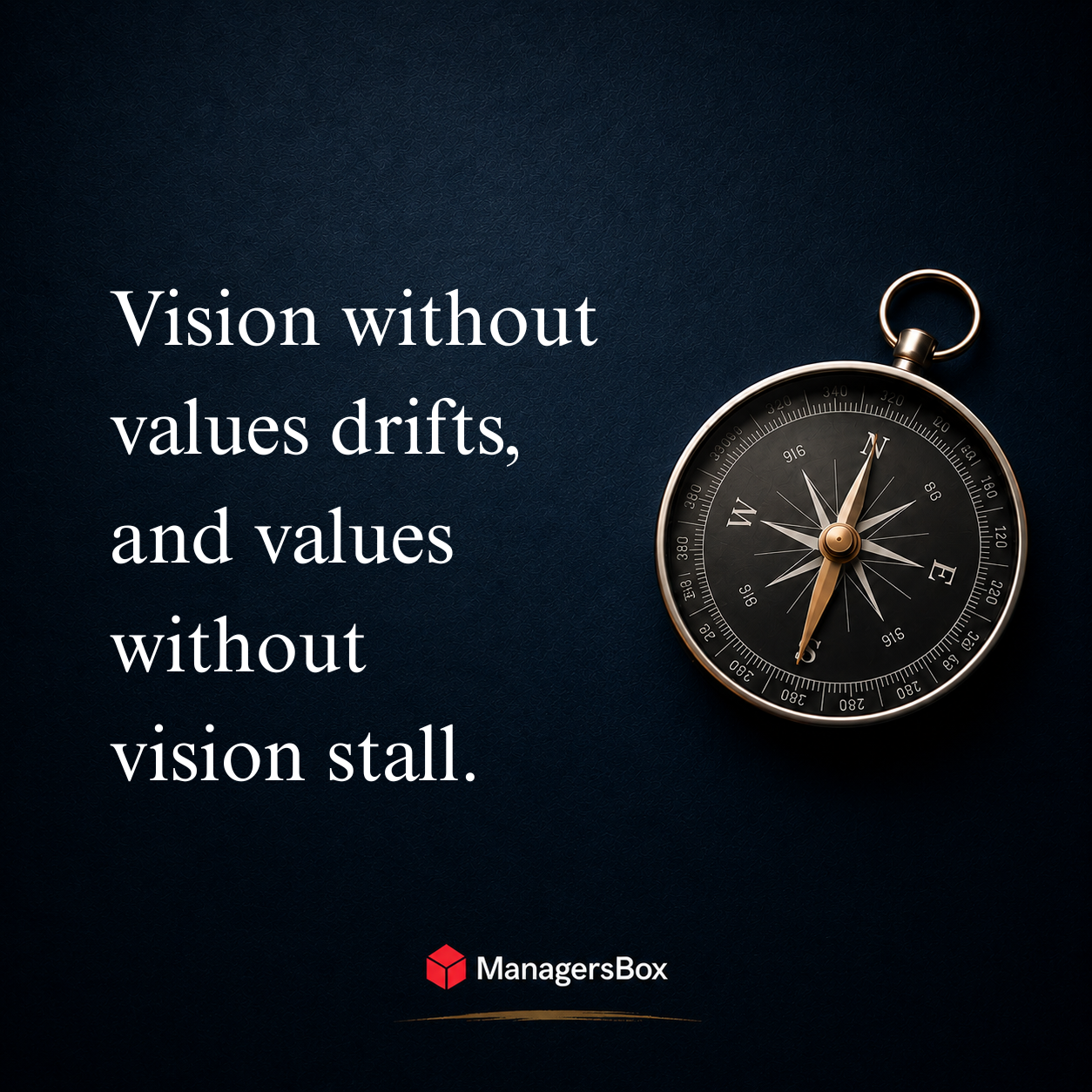
Principle Alignment is where leadership becomes coherent. It is the step that prevents “tactical noise” — conflicting decisions made under pressure that slowly erode trust and performance.
Purpose
Principles are the rules you refuse to break when stress rises. They guide trade-offs, shape culture, and keep decision-making consistent across people and time.
When principles are unclear, teams experience leadership as random. When principles are clear, teams can move without waiting for permission.
What Principles Are
- Decision filters: simple standards that clarify what “good” looks like.
- Boundary setters: what you will not do — even if it is convenient.
- Consistency builders: a way to reduce contradictions across leaders and departments.
- Trust builders: when actions match words, confidence rises.
What Principle Alignment Is Not
- It is not slogans or posters.
- It is not branding language.
- It is not vague “values” that change when it gets difficult.
Principles only matter if they are applied under pressure.
Key Questions
- What do we stand for in practice — not in theory?
- What trade-offs will we refuse to make?
- What behaviours are rewarded here (intentionally or accidentally)?
- Where are we inconsistent — and what does that inconsistency signal?
- If a new leader joined tomorrow, what “rules” would they need to know to lead well?
Common Leadership Error
Another error is treating principles as inspirational language rather than decision discipline. Teams do not need more words. They need fewer contradictions.
Practical Application
Keep principles short and usable. A practical method:
- Define 3–5 principles that directly affect decisions.
- Write them as rules, not aspirations (e.g., “We protect customer trust first”).
- Attach one real example to each principle.
- Use principles explicitly in meetings: “Which principle does this support?”
Once aligned, principles become a shared operating system. They reduce friction, speed decisions, and create stability — especially during change.
← Back to Leadership Framework